
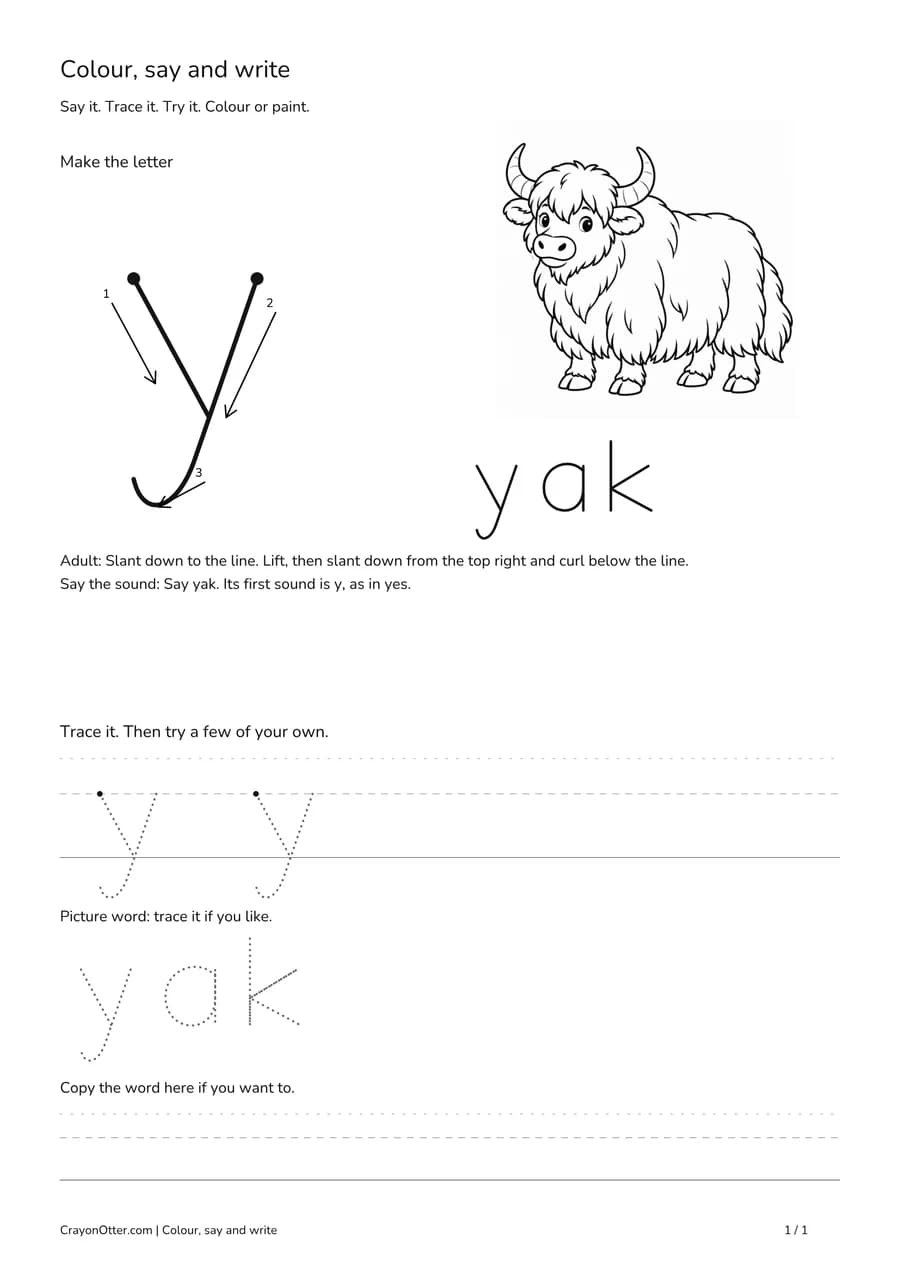
ACTIVITY 1 OF 5
y for yak: slant down and continue below
Colour a shaggy yak and practise lowercase y with its descending tail. Hear the first sound as in yes, follow the two strokes and use the blank writing space; copying yak is optional.
FIVE WAYS TO TRY ONE LETTER
A yak introduces lowercase y and its tail below the writing line. Compare g and j, say yes, yak and yam, then colour a yak beside a yam. The yes picture uses a thumbs-up gesture so an adult can explain the answer word.
One activity per page, in the order below. Choose the PDF for your A4 or US Letter paper. There is no cover or blank page.
Colour a shaggy yak and practise lowercase y with its descending tail. Hear the first sound as in yes, follow the two strokes and use the blank writing space; copying yak is optional.
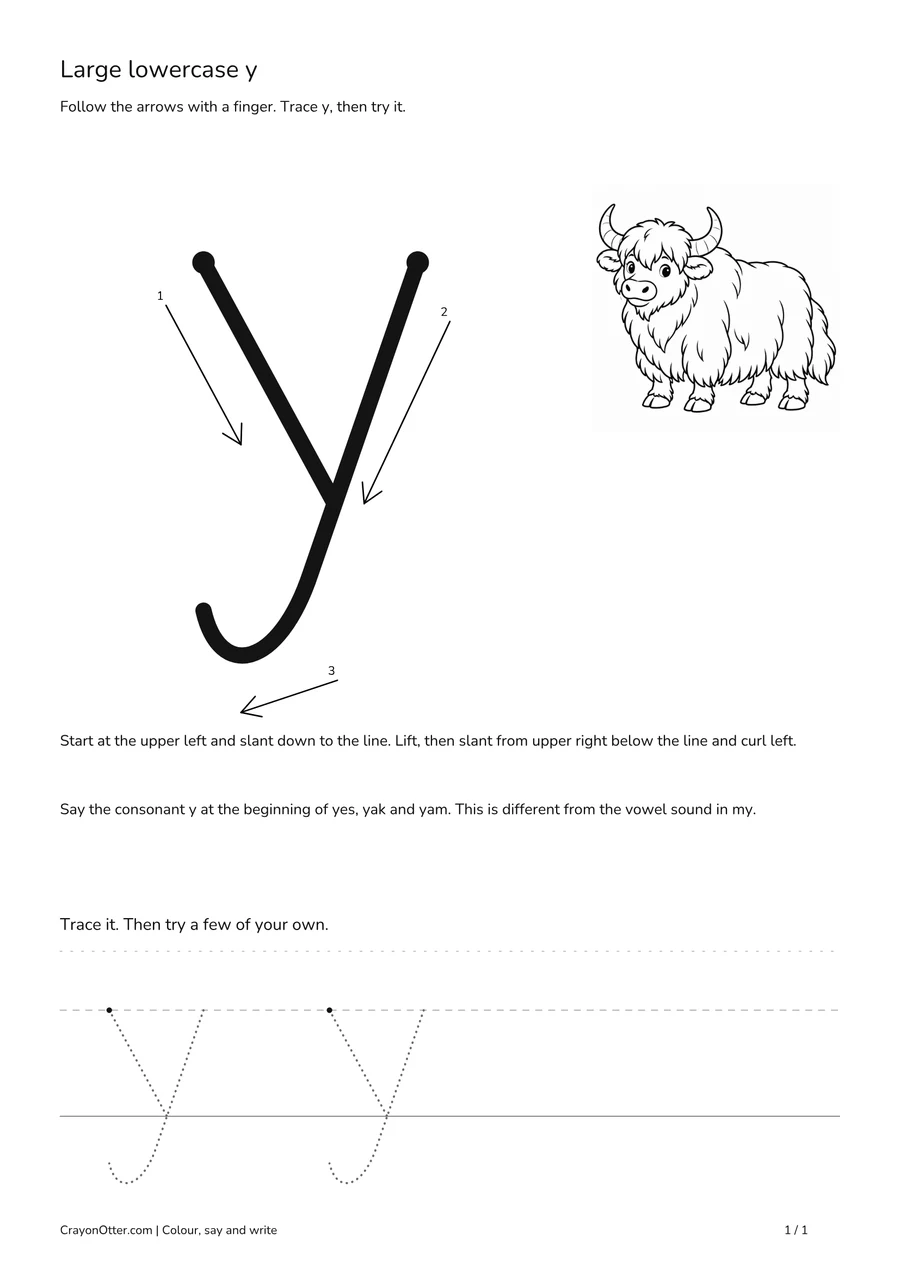
Follow lowercase y's two branches and long tail beside a yak. Leave room below the line for the descending curl.
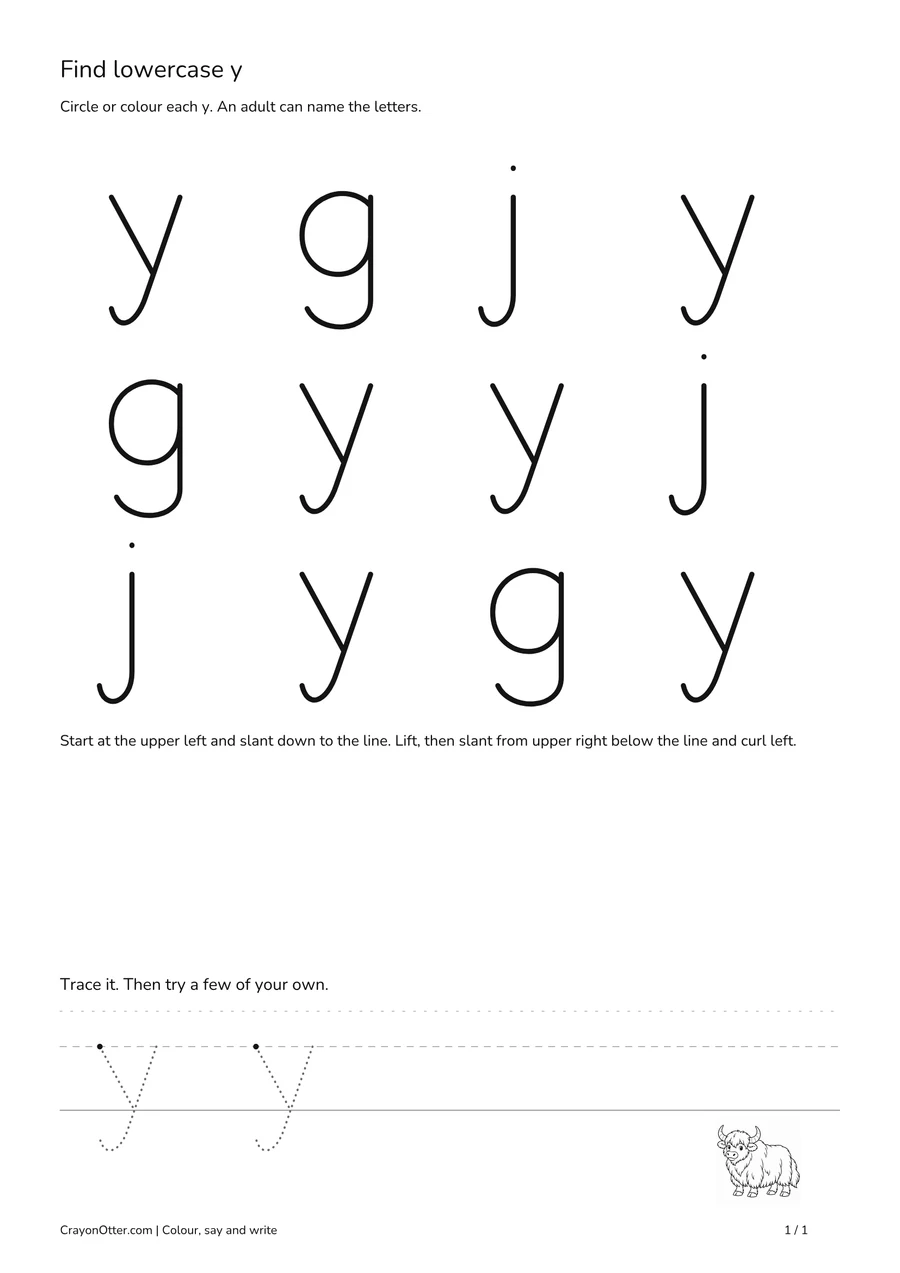
Find six lowercase y letters among g and j. Compare their tails and start points, then trace y with space below the line.
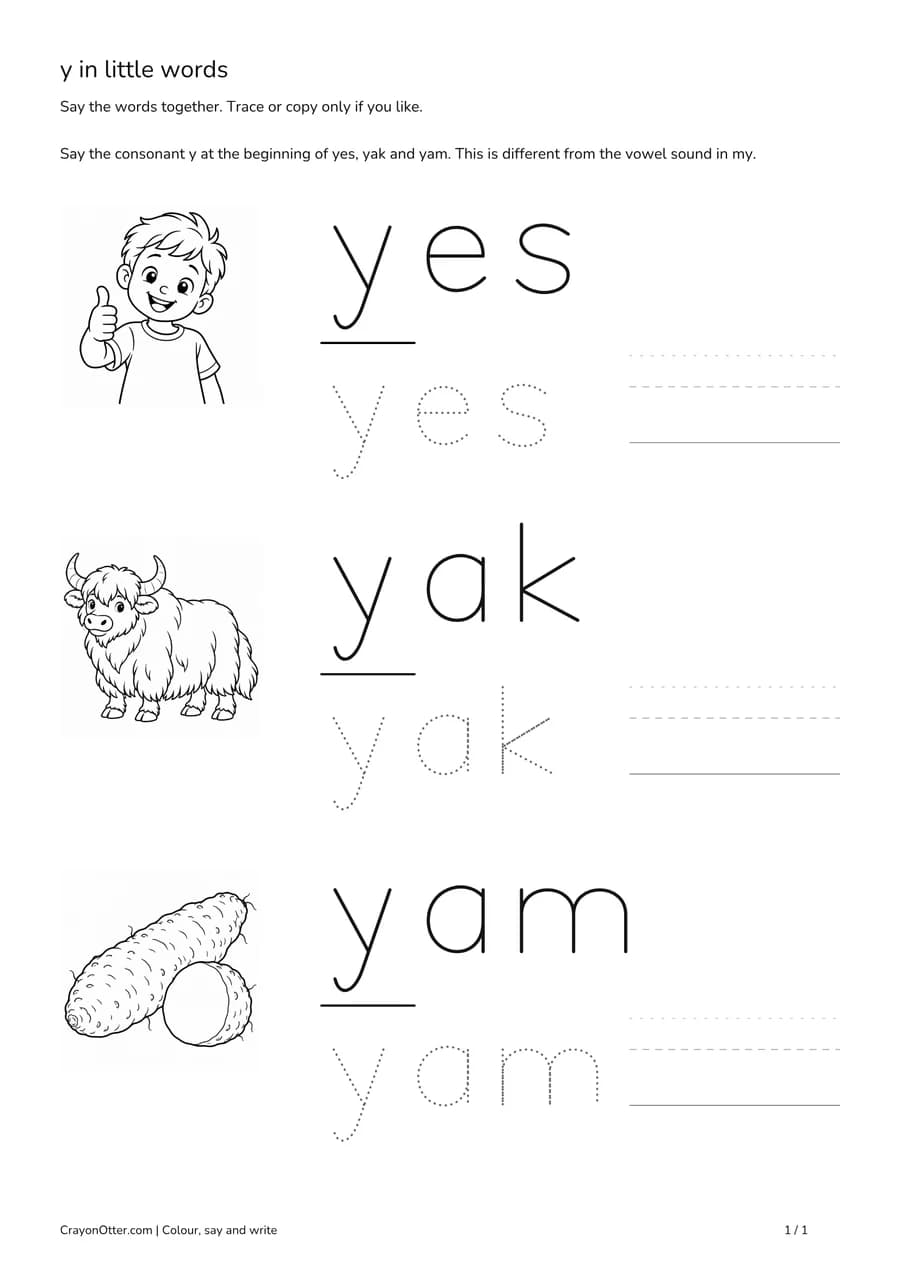
Name yes, yak and yam with an adult. A thumbs-up shows yes; find written y at the start of each word before optional copying.
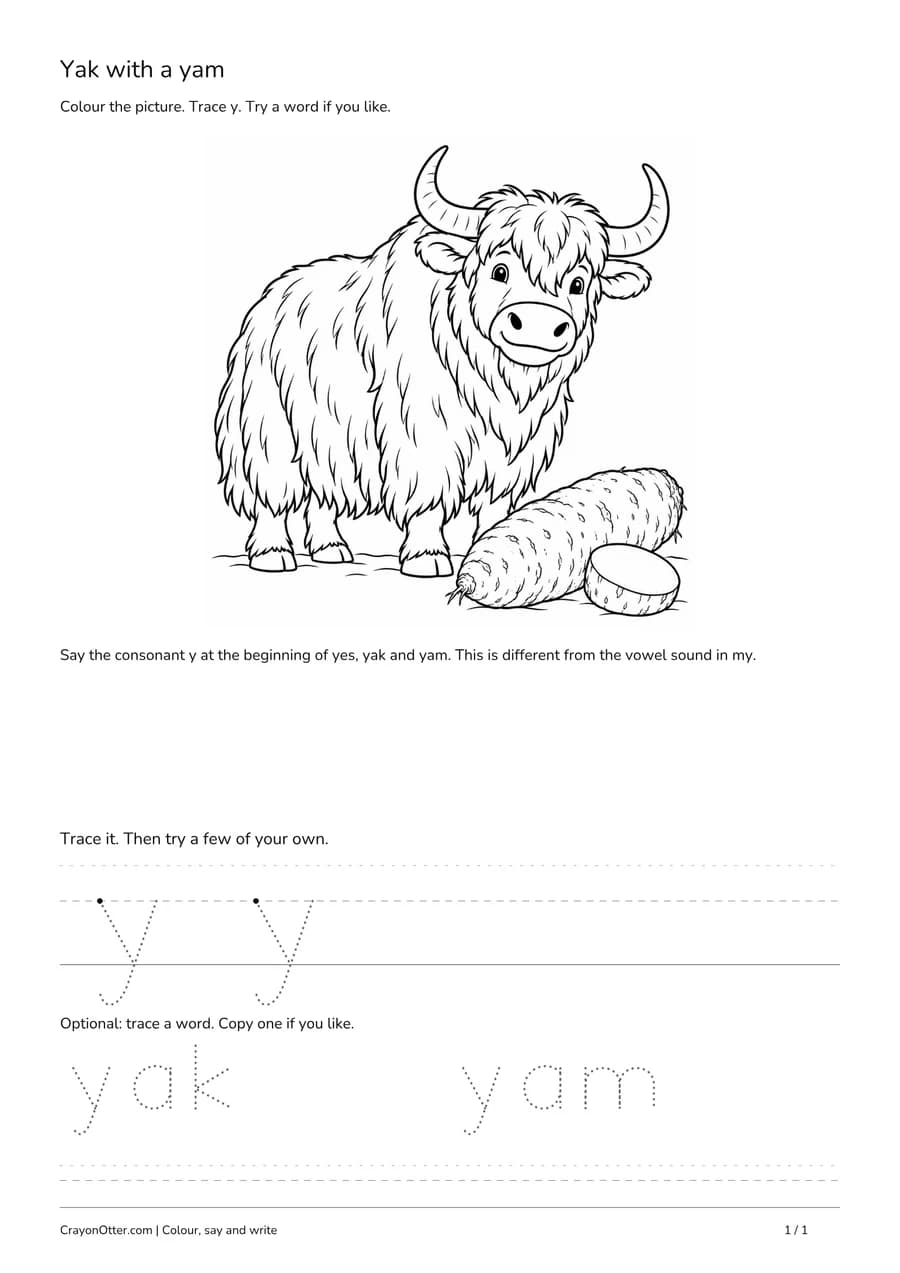
Colour a yak beside a yam. Practise the y tail below the line; tracing either picture word is optional.
Slant down from the upper left to the writing line. Lift, begin at the upper right, slant below the line and curl left. The large page and tracing row leave space under the baseline.
The finding grid includes g and j, which also descend. Look at their round bowl or dot before choosing one of six y shapes. Keep the letter task separate from sounding out longer words.
Use a thumbs-up gesture to show yes, then name the yak and yam. Initial y here is a consonant sound; it differs from the vowel sound in my. Adults can read the labels, and copying stays optional.
For uppercase and lowercase together, try the Yy alphabet colouring and tracing sheet. These five activities focus on lowercase y, including yes, yak, yam. See printing and paper-size help when choosing a PDF.
Return to the letter practice shelf to choose another available activity. Follow the child’s interest and stop when they have had enough.