
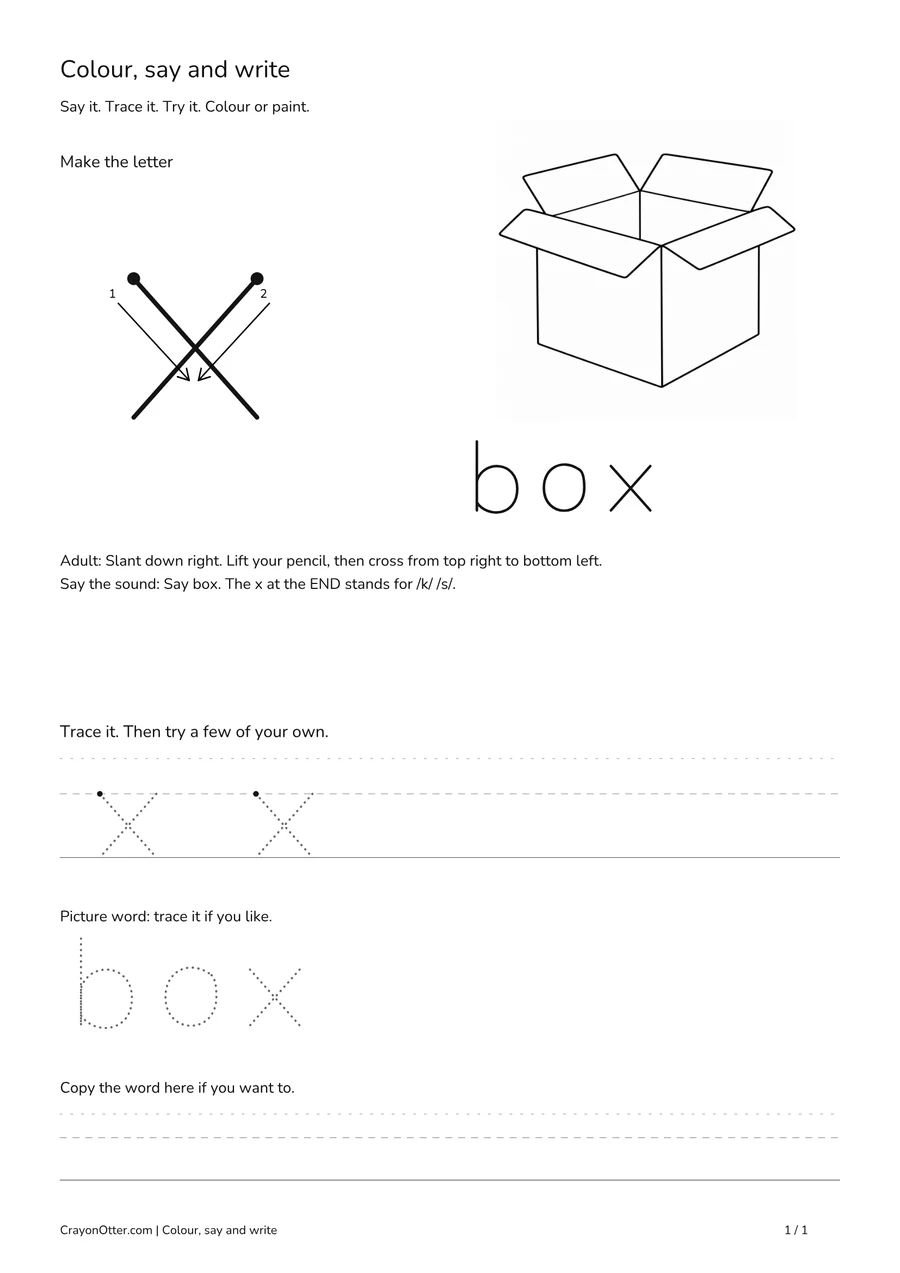
ACTIVITY 1 OF 5
x at the end of box: two crossing strokes
A plain box introduces x at the end of a word. Follow two separate crossing strokes, trace lowercase x and try your own; an adult can say box before optional word copying.
FIVE WAYS TO TRY ONE LETTER
These lowercase x pages use the letter at the end of box, fox and six. Cross two separate slants, find x among t and k, then colour a fox beside a box. An adult can model the two sounds /k/ then /s/ represented by final x.
One activity per page, in the order below. Choose the PDF for your A4 or US Letter paper. There is no cover or blank page.
A plain box introduces x at the end of a word. Follow two separate crossing strokes, trace lowercase x and try your own; an adult can say box before optional word copying.
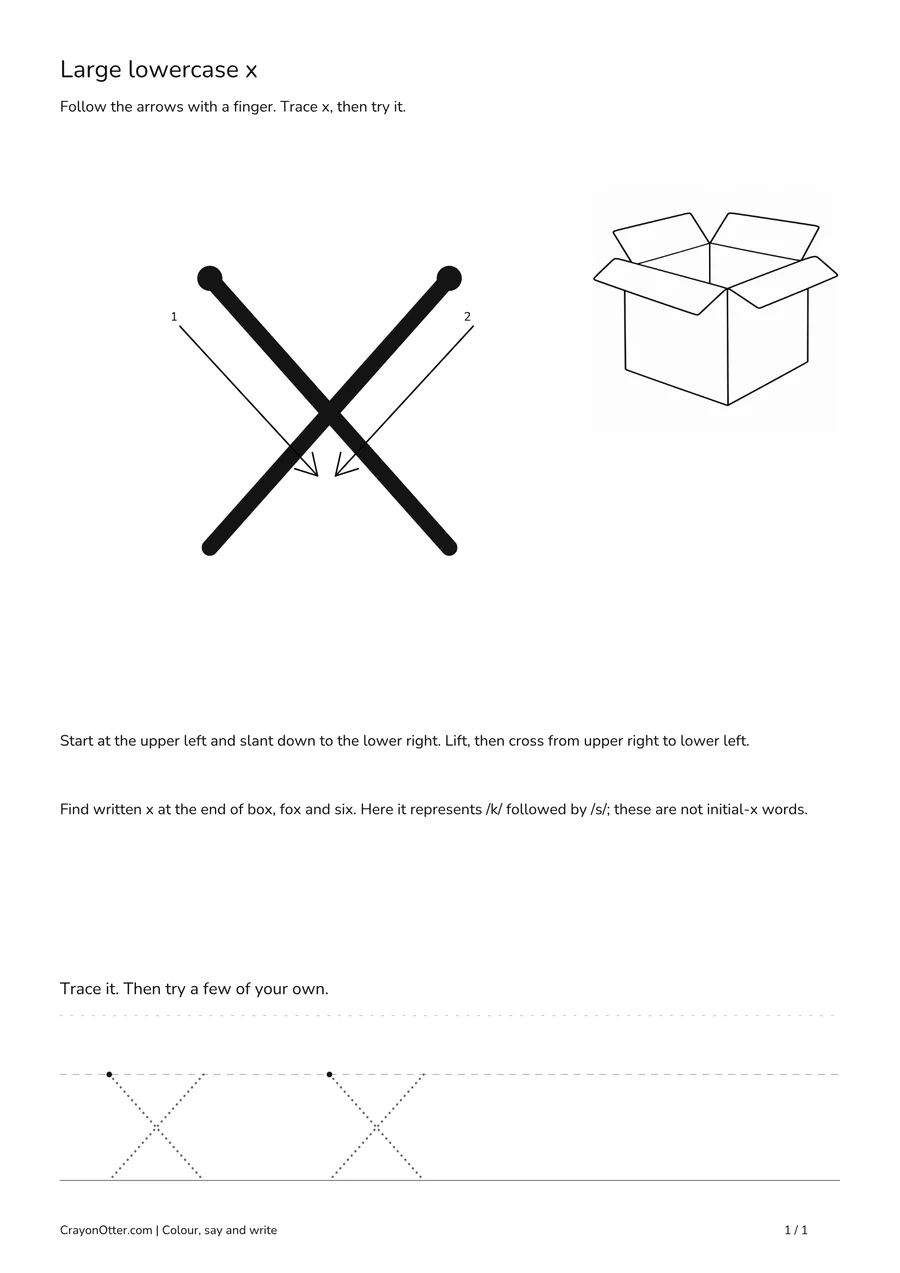
Follow two crossing lowercase x strokes beside a box. Start each stroke at the top, lift between them and try your own.
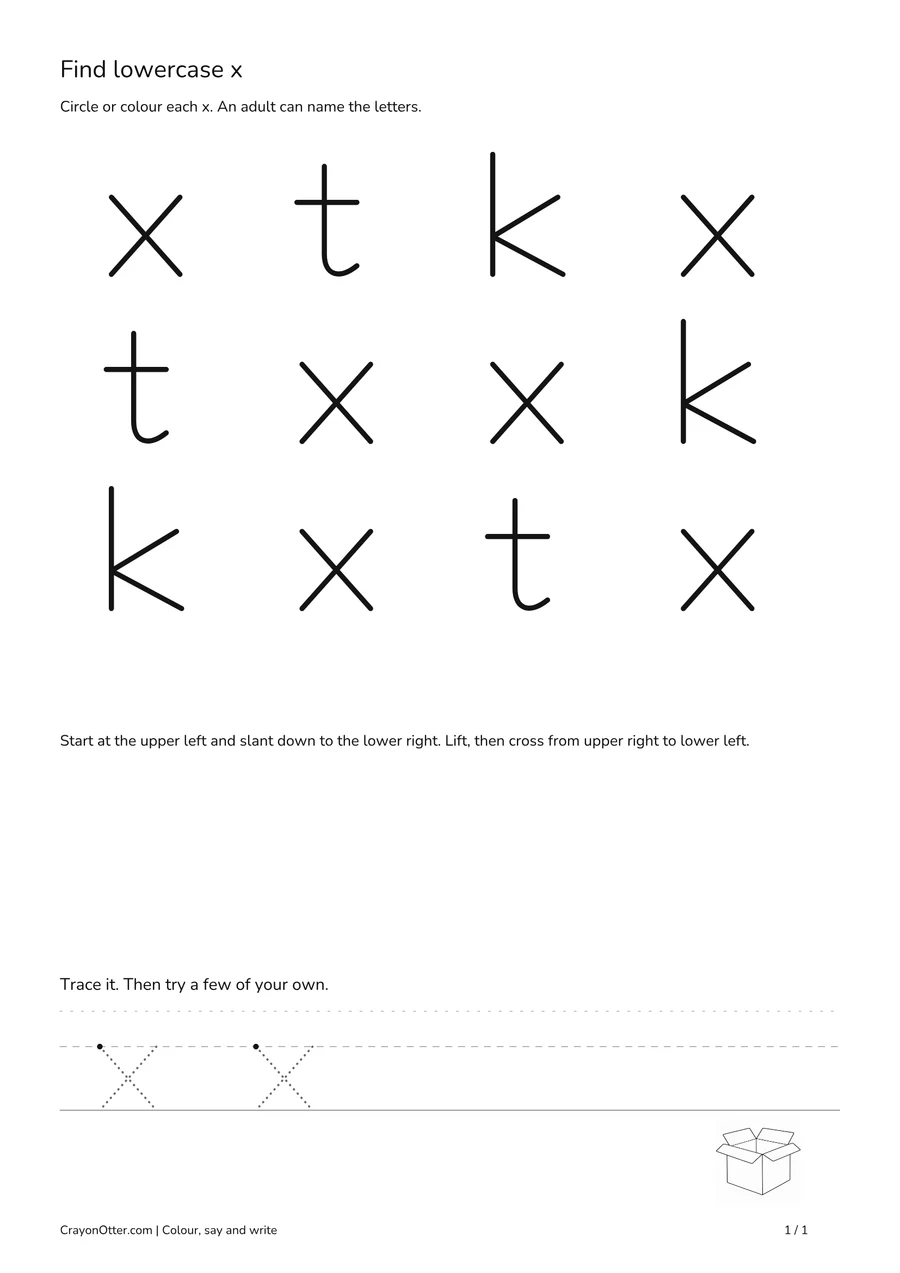
Find six lowercase x letters among t and k. Notice both crossing slants before tracing and trying x on the guides.
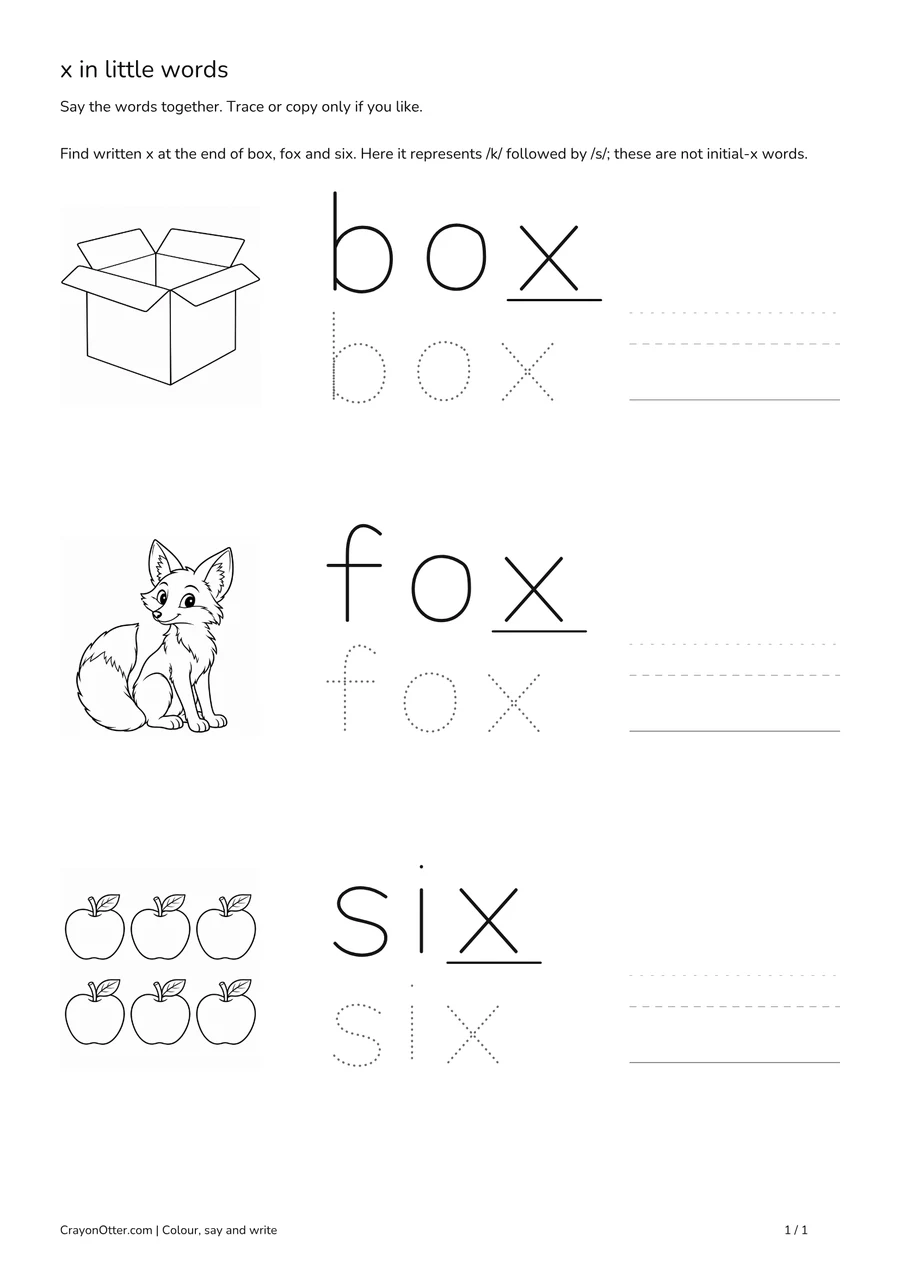
Name box, fox and six together. Mark written x at the end of each word; an adult can model the /k/ then /s/ sounds.
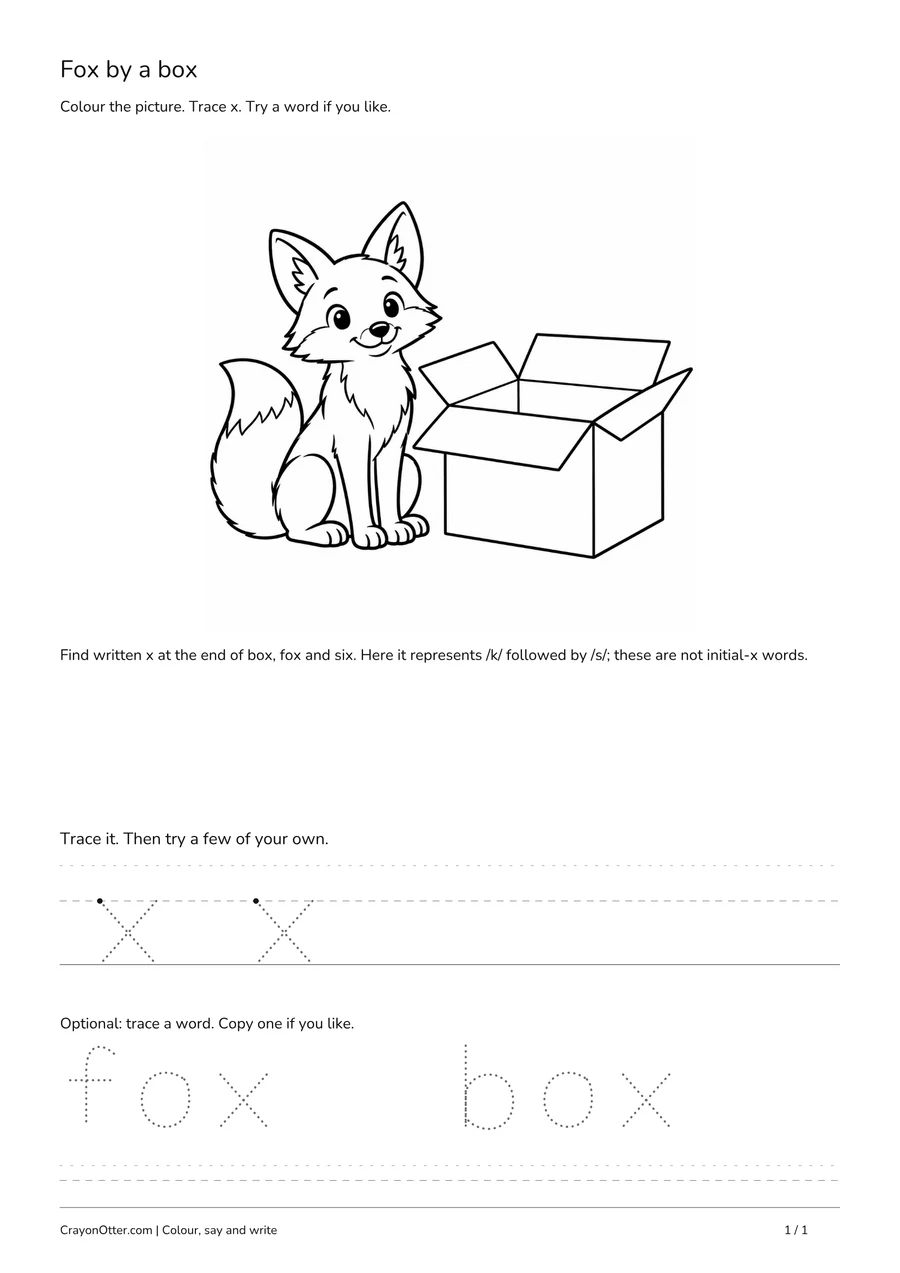
Colour a fox beside a box. Find the final x in both labels, practise its crossing strokes and copy only if you like.
Draw one slant from upper left to lower right. Lift the pencil, then draw the second from upper right to lower left. The marked starts show two strokes rather than a single turn.
Find six x shapes among t and k. Both comparison letters have other lines, so look for the two crossing diagonals. An adult can name the letters while the child points or circles.
Say box, fox and six. The written x comes last in each word and represents /k/ followed by /s/ here; these are not examples of an initial x sound. Mark the final letter and colour the fox scene without requiring whole-word copying.
For uppercase and lowercase together, try the Xx alphabet colouring and tracing sheet. These five activities focus on lowercase x, including box, fox, six. See printing and paper-size help when choosing a PDF.
Return to the letter practice shelf to choose another available activity. Follow the child’s interest and stop when they have had enough.