
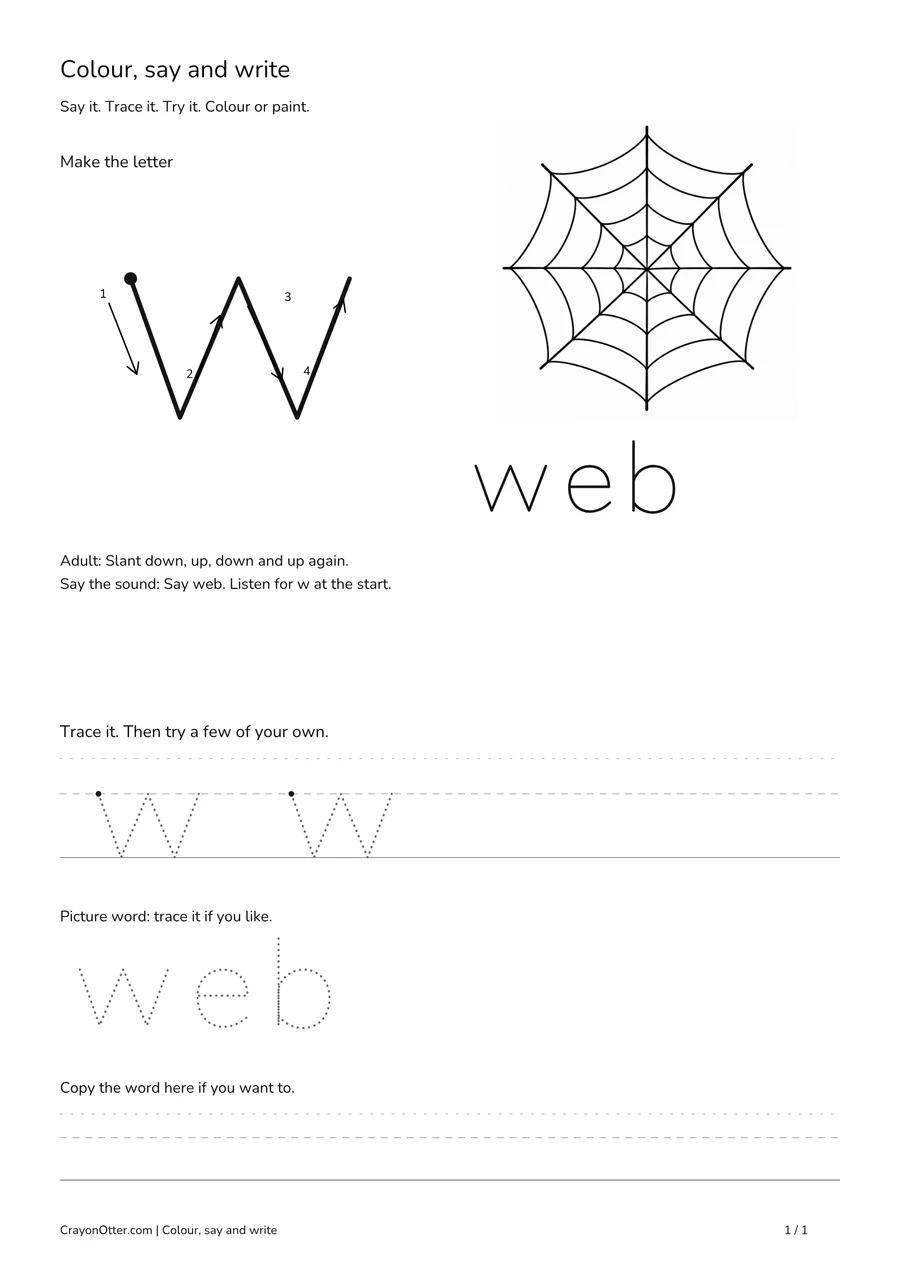
ACTIVITY 1 OF 5
w for web: down, up, down and up
Practise all four slanting movements of lowercase w beside a spider web. The numbered arrows show each change of direction before tracing and roomy attempts; web copying is optional.
FIVE WAYS TO TRY ONE LETTER
Follow the four slants of lowercase w beside a web, then find w among m and v. Web, wig and wet lead to a web with water drops. An adult can name the pictures; tracing a whole word is optional.
One activity per page, in the order below. Choose the PDF for your A4 or US Letter paper. There is no cover or blank page.
Practise all four slanting movements of lowercase w beside a spider web. The numbered arrows show each change of direction before tracing and roomy attempts; web copying is optional.
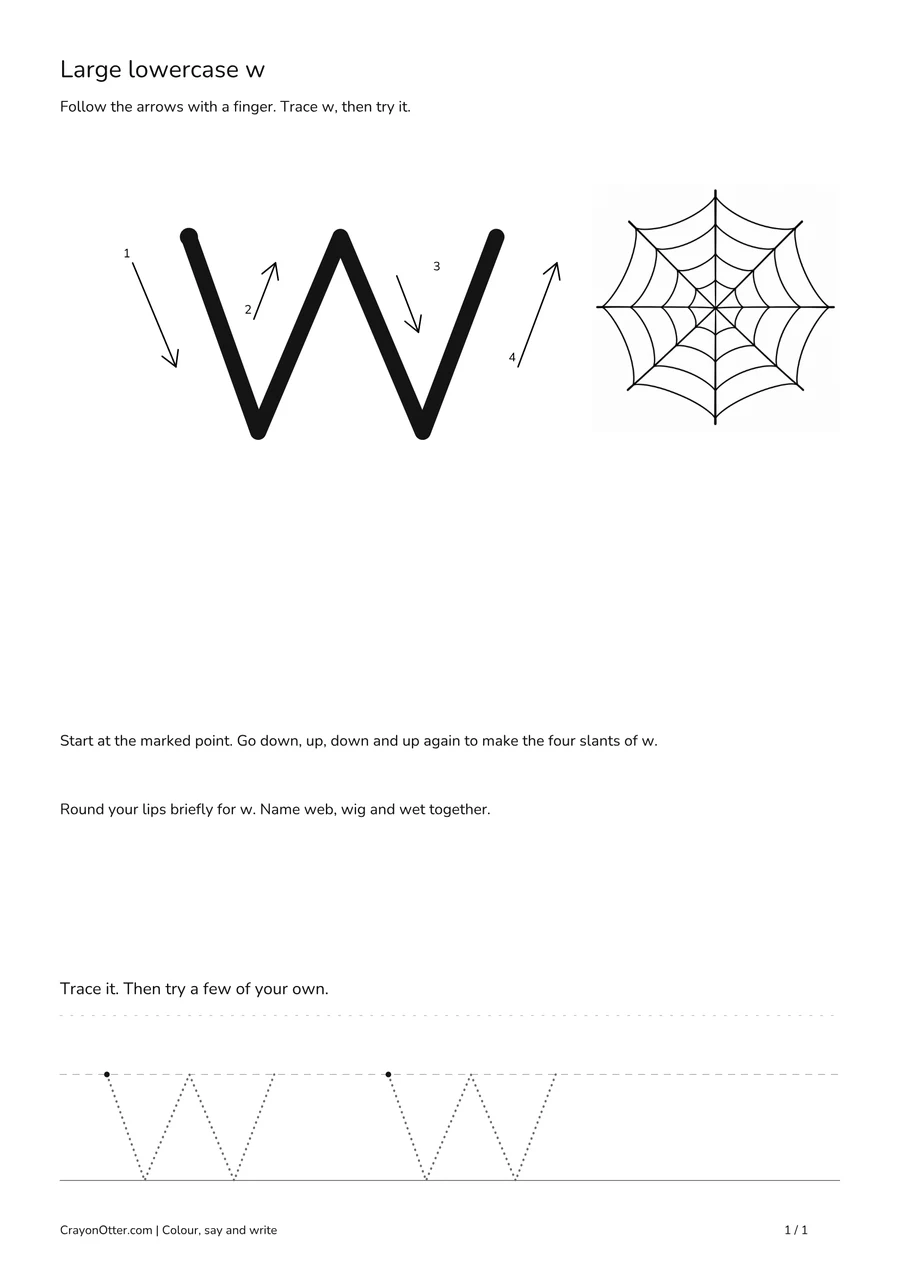
Follow all four slants of lowercase w beside a web. Use the arrows in order, then trace and try the shape independently.
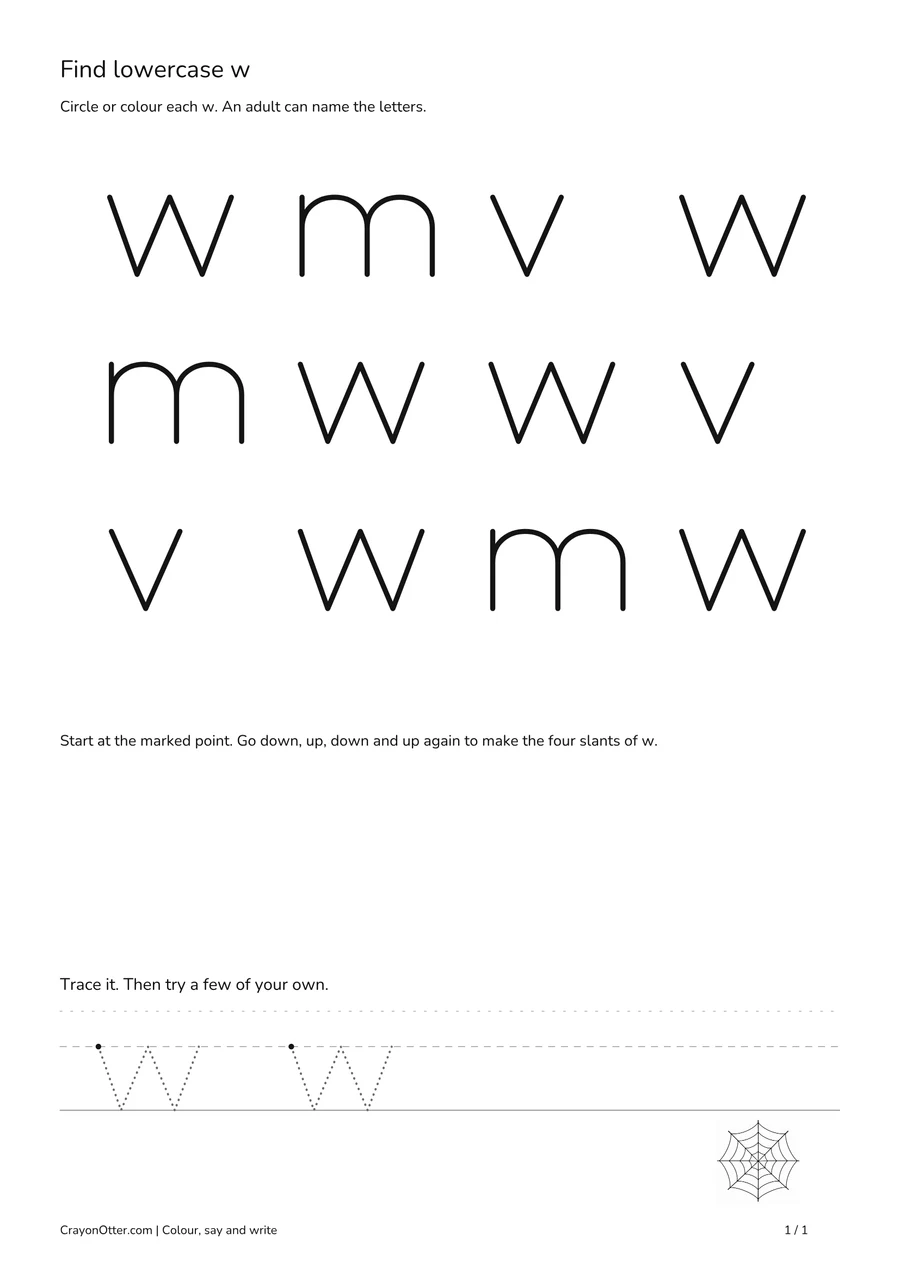
Find six lowercase w letters among m and v. Notice the two low points before tracing and writing a few w letters.
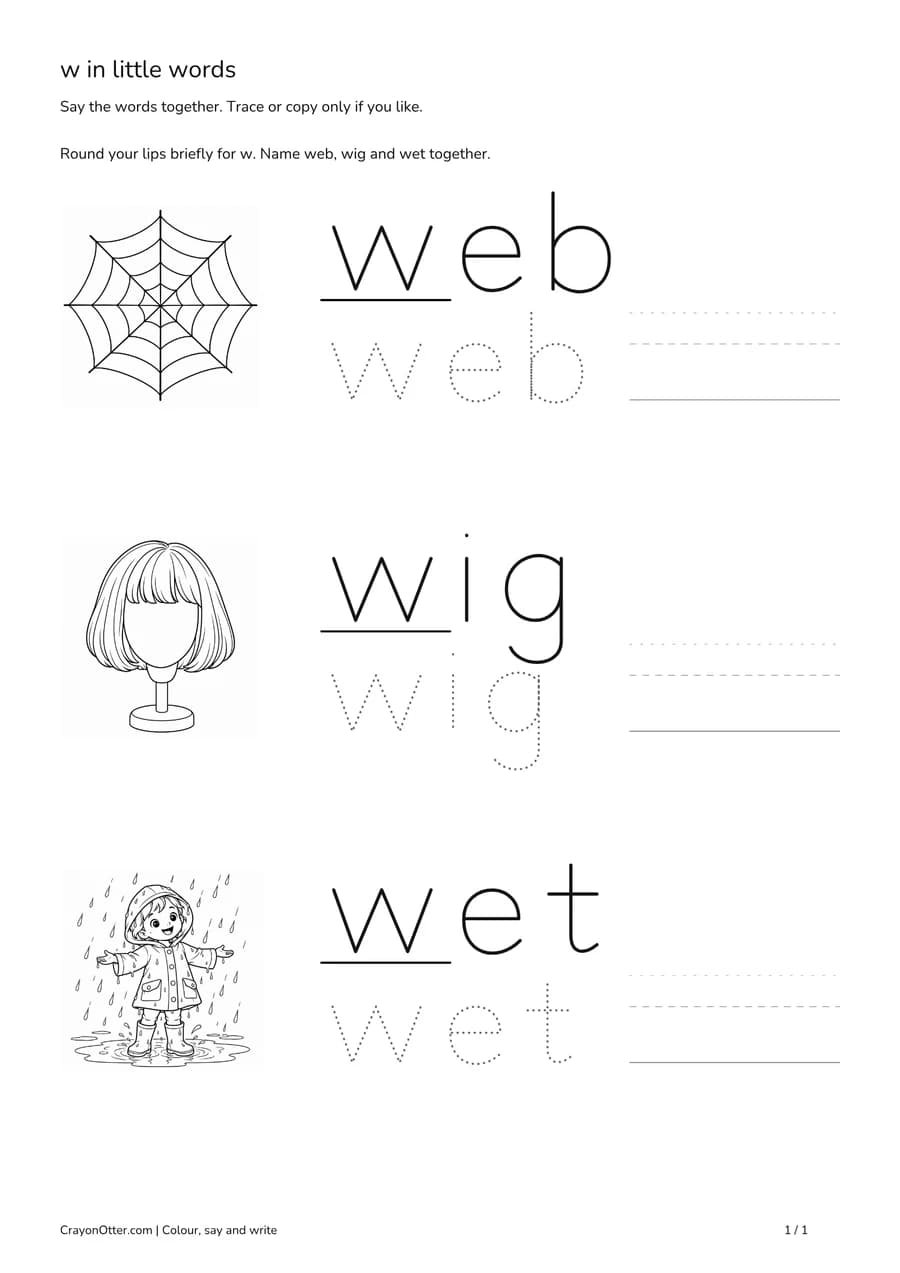
Name web, wig and wet with an adult. Find the first written w in each label; tracing or copying the words is optional.
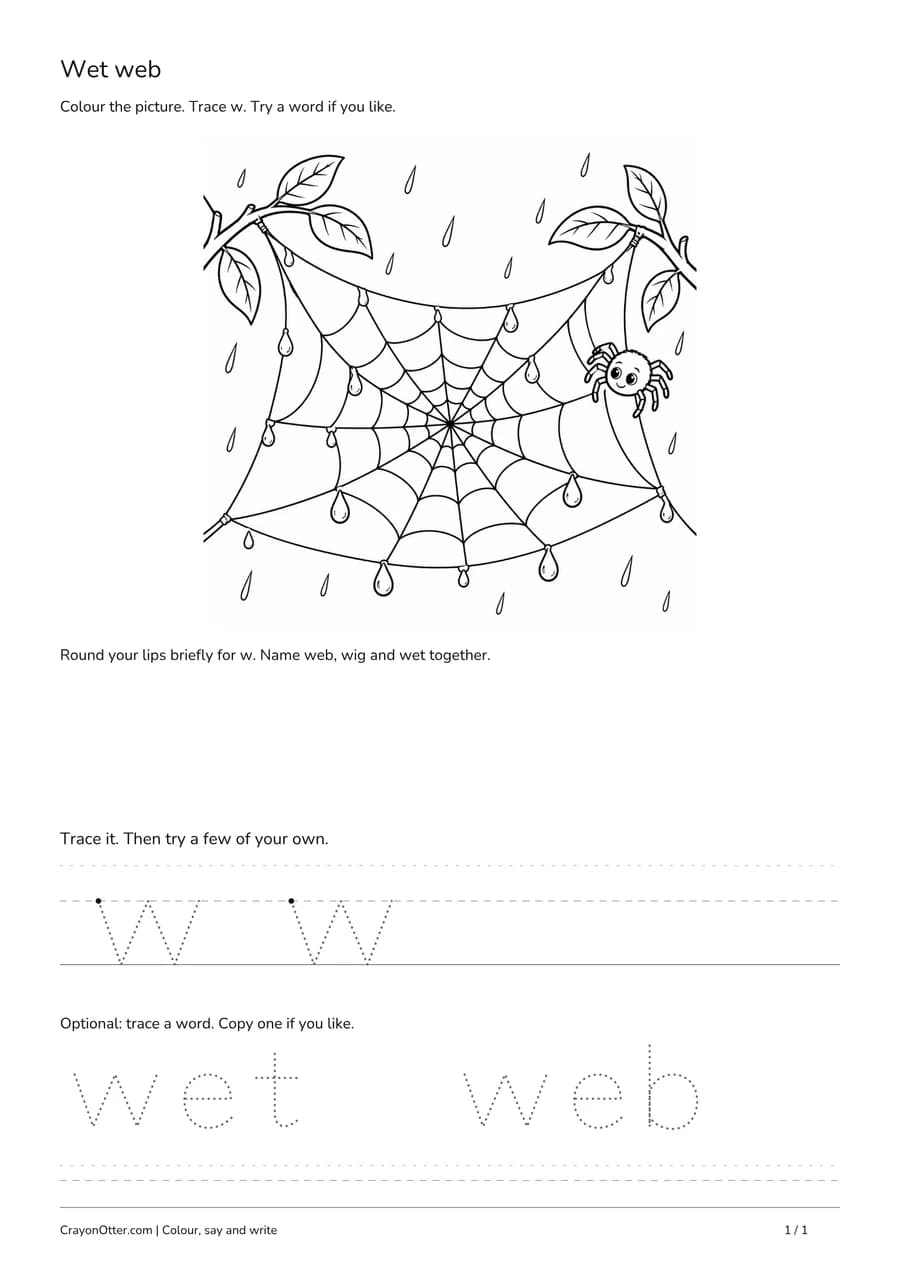
Colour a web with visible water drops. Say wet web together, practise w and copy a word only if you like.
Start at the upper left and follow the arrows down, up, down and up. The line stays connected through all four slants. Leave enough width for both low points when trying your own w.
Compare the two low points of w with the single point of v. Lowercase m has rounded shoulders instead. Name the shapes while the child finds six w letters among twelve choices.
A wig is hair worn over the head, and wet means covered with water. Point to the first w in web, wig and wet. The final web has visible drops to colour; no independent reading is required.
For uppercase and lowercase together, try the Ww alphabet colouring and tracing sheet. These five activities focus on lowercase w, including web, wig, wet. See printing and paper-size help when choosing a PDF.
Return to the letter practice shelf to choose another available activity. Follow the child’s interest and stop when they have had enough.