
ACTIVITY 1 OF 5
l for lollipop: a long downward movement
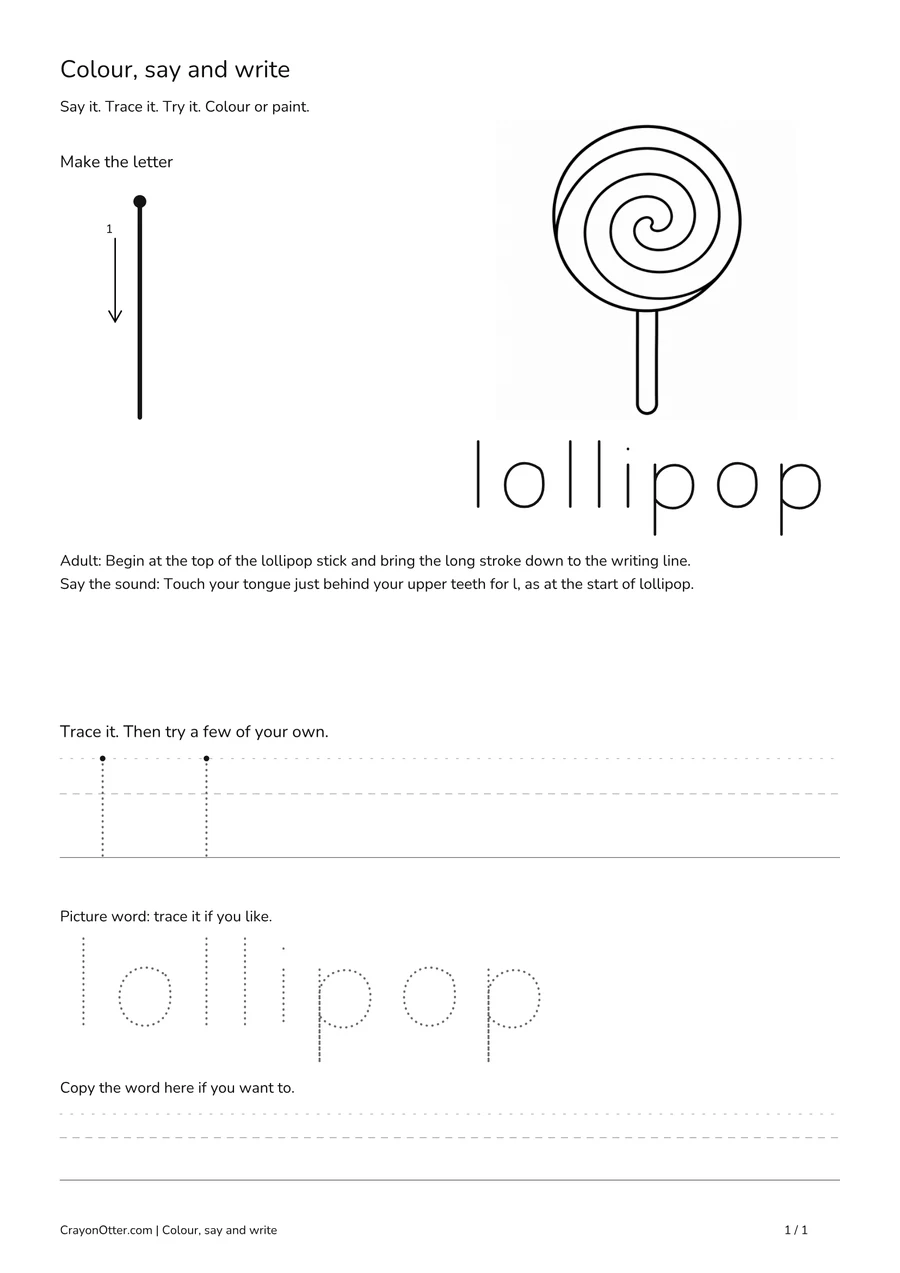
A lollipop picture introduces lowercase l's tall downward movement. An adult can say the first sound and model the stroke before tracing; the longer picture word is optional to copy.
FIVE WAYS TO TRY ONE LETTER
A tall downward stroke makes lowercase l. Start beside the lollipop, compare l with short i and crossed t, or explore lip, leg and log. A lizard on a log finishes the five-page pack; copying words is optional.
One activity per page, in the order below. Choose the PDF for your A4 or US Letter paper. There is no cover or blank page.
A lollipop picture introduces lowercase l's tall downward movement. An adult can say the first sound and model the stroke before tracing; the longer picture word is optional to copy.
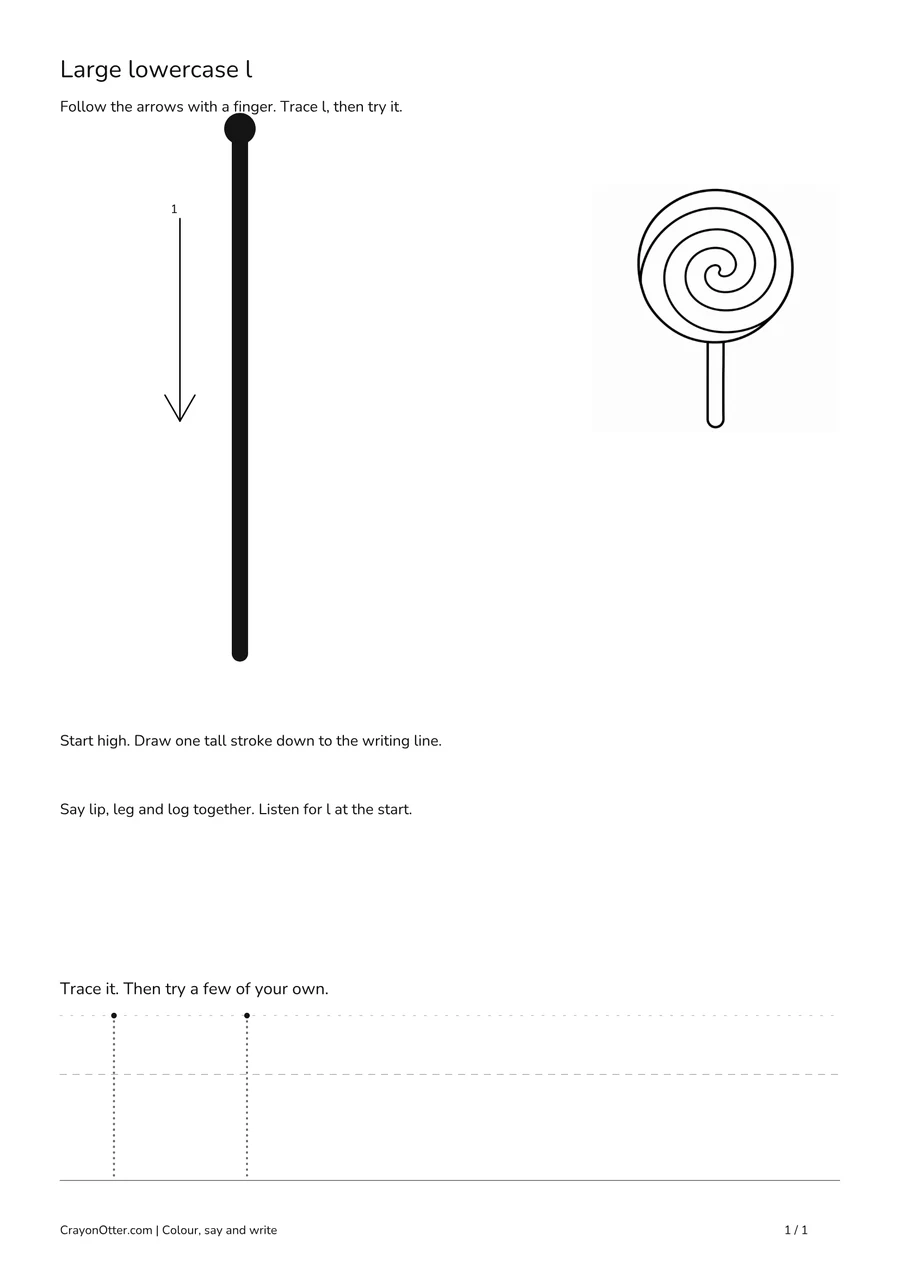
Follow a large lowercase l movement with an adult, then trace and try your own. Start high. Draw one tall stroke down to the writing line.
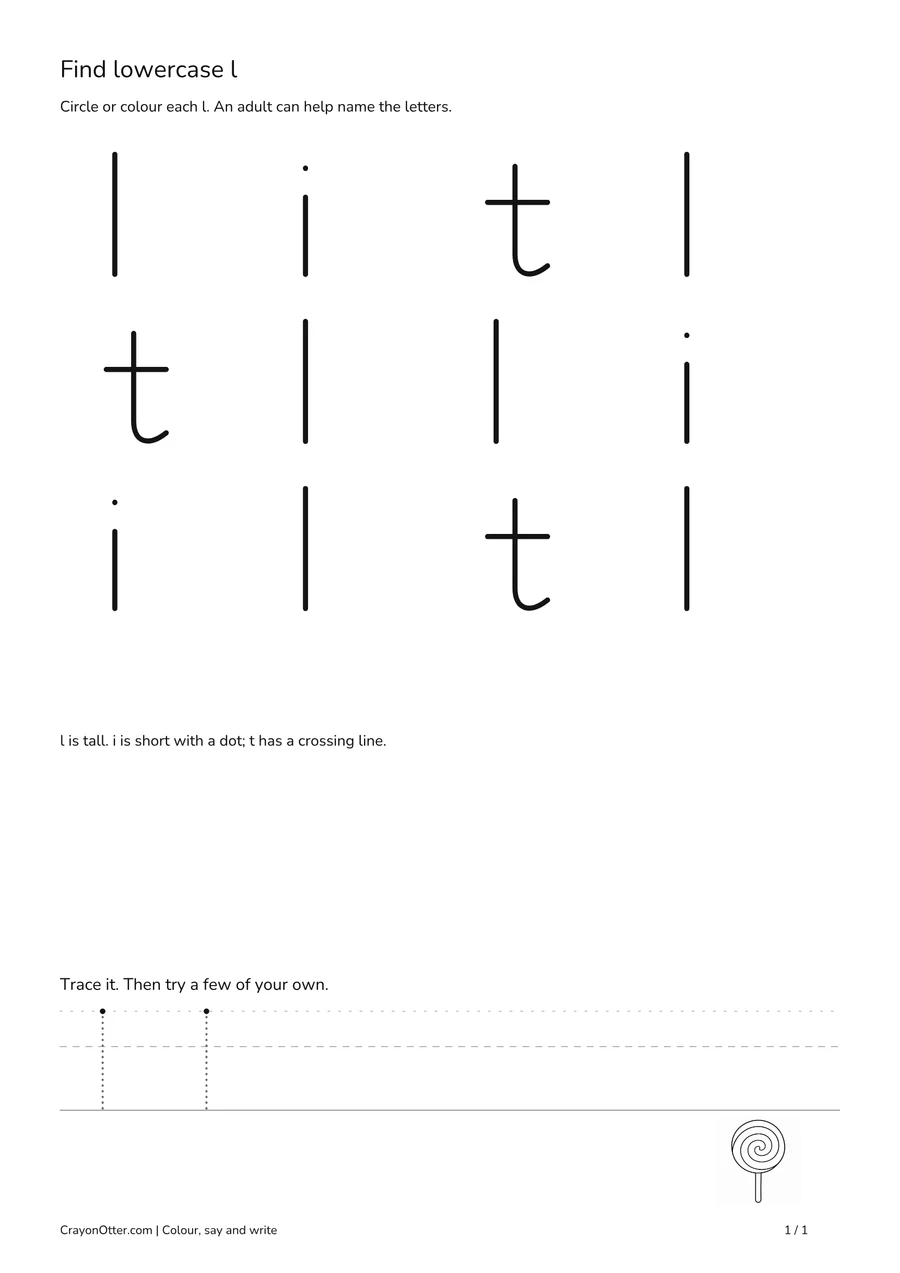
Look for lowercase l among i and t. An adult can name the letters and compare their shapes before tracing.
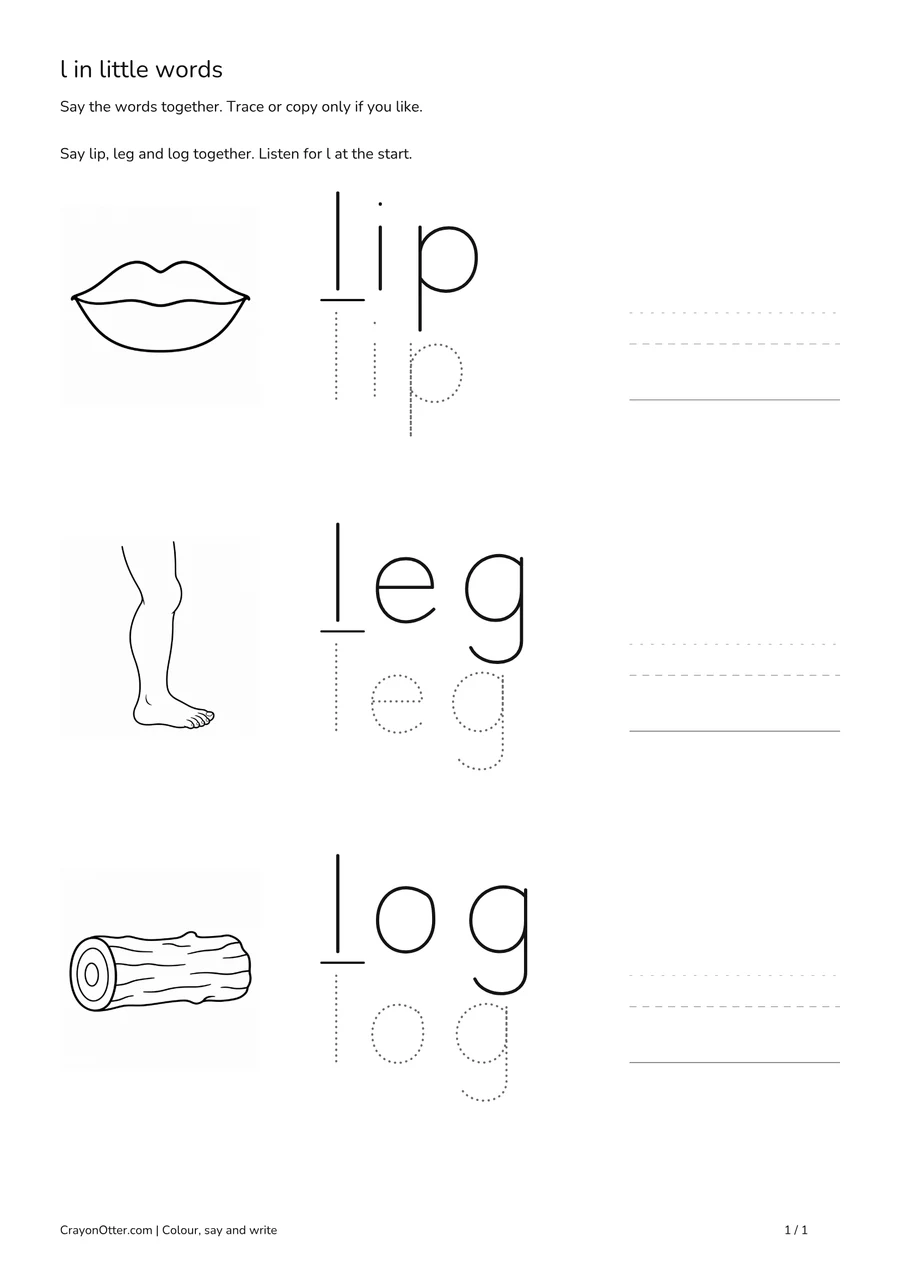
Name the lip, leg, log pictures together and find l in each word. Tracing and copying are optional; an adult can read the words aloud.
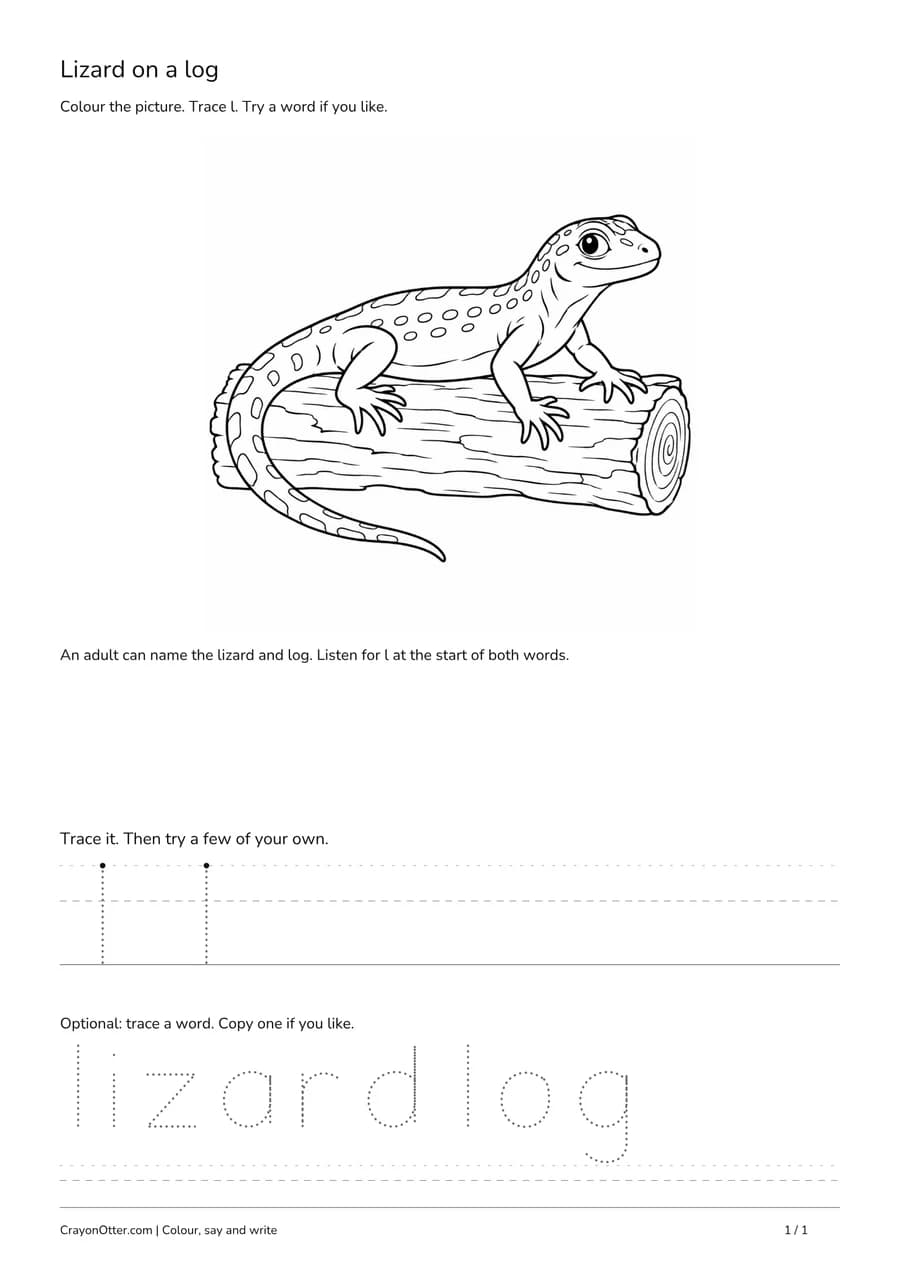
Colour the lizard on a log scene and practise lowercase l. An adult can name the pictures; tracing or copying a whole word is optional.
Model the movement from the top down to the writing line. The large page gives a finger or crayon room to follow the stroke before trying smaller letters.
On the finding page, compare the height of l with the short stem and dot of i. Look for the crossbar on t. An adult can name the letters while the child points, circles or colours.
Say lip, leg and log together and listen for the starting sound. Name the lizard in the final picture; the child can practise l without reading or copying the longer word.
For uppercase and lowercase together, try the Ll alphabet colouring and tracing sheet. These five activities focus on lowercase l, including lip, leg, log. See printing and paper-size help when choosing a PDF.
Return to the letter practice shelf to choose another available activity. Follow the child’s interest and stop when they have had enough.